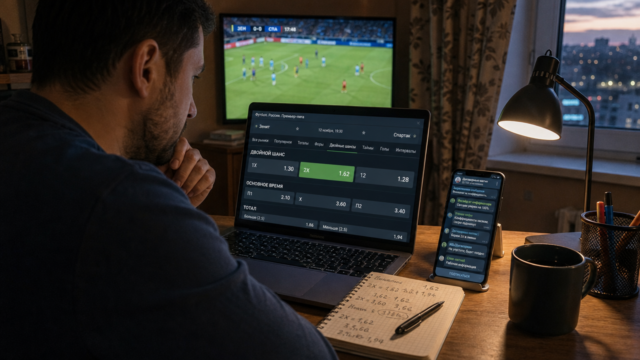

AI football predictions are probability engines, not fortune tellers. Prediction platforms use statistics, match data, model confidence, odds, and reviews to estimate possible outcomes. A probability is not a bet by itself. It becomes useful when it can be compared with the available price and the model’s fair odds.
Some platforms report high accuracy in specific football markets, including 90% for over 0.5 goals and 79% for under 3.5 goals. Those figures apply to selected soccer markets and should not be treated as universal results. Another system reports 66.6% accuracy across 278,975 matches in 711 leagues. The figure covers football predictions across many competitions, so it does not automatically describe performance in every market.
What AI Football Predictions Actually Calculate
AI football predictions evaluate more than a team’s latest result. Models can assess form, previous meetings, expected goals, transfers, team news, and other statistical signals. Some platforms also update forecasts when lineups change or live events affect a match.
The output may include a predicted probability, fair odds, confidence level, or estimated edge. These figures help users compare a model’s view with bookmaker odds. They do not guarantee a winning result or a profit.
Applying AI to Football Markets
A useful model must match the sport and competition it covers. A system trained on one group of football markets may not perform the same way in another. Coverage can range from major competitions to local tournaments, while some services also provide predictions for hockey, tennis, baseball, and esports.
The strongest use of AI is to organize information that is difficult to assess manually. Form, historical results, expected-goal data, transfers, lineup changes, and live developments can be combined into one forecast. Users can then compare the prediction with current odds instead of relying only on recent scores or reputation.
Price Sensitivity and Transparency
The model’s output is not the bet. The decision depends on the difference between the model’s fair probability and the available price. If a prediction does not show odds, confidence, or a clear record of past results, it is difficult to judge whether the forecast offers a genuine edge.
Transparency matters as much as the headline accuracy. Some platforms publish open statistics for every match and state that results are not manually edited. Others provide daily free tips, match signals, reviews, and notifications when odds change before kick-off. These features make it easier to assess a forecast before acting on it.
Where Marketed AI Accuracy Breaks Down
High hit rates can be misleading when the odds are not shown. A strong percentage in a selected market may reflect short prices, a narrow sample, or a particular type of bet. Accuracy should be reviewed alongside the odds available when each prediction was issued and the results across a meaningful sample.
AI football predictions are most useful when the platform explains its method, publishes its record, and distinguishes probability from certainty. No model can guarantee profits. A forecast should support a decision, not force one.