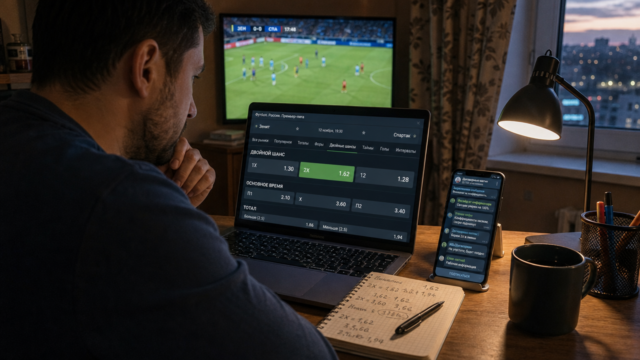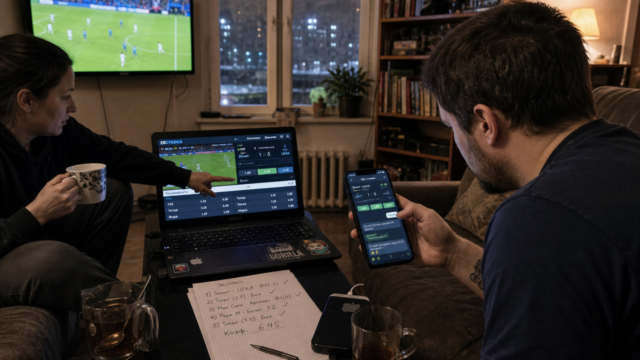
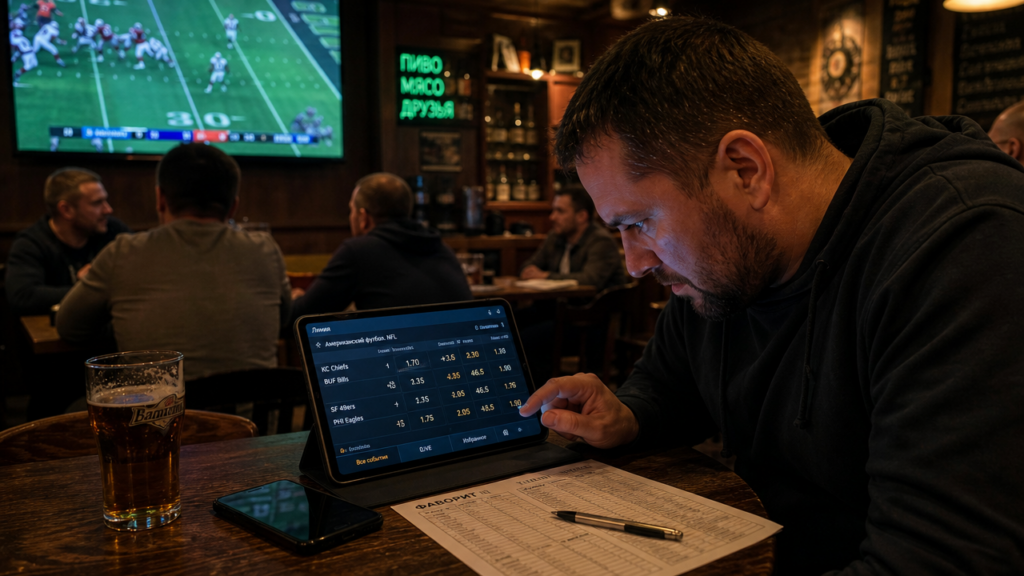
The early American football betting board for September 25 and 26 includes several scheduled games. The first thing to read is the number, not the team name. A spread of -7.5 means the listed favorite must win by 8 or more. A total of 46.5 means the combined points from both teams decide the over or the under. These prices are market handicaps, not predictions.
American football uses a 110 by 50 meter field with 11 players per side. The scoring system creates the betting math. A touchdown is worth 6 points, a field goal is worth 3, and a safety is worth 2. Key numbers in the market are 3, 7 and 10 because those are common scoring margins. That is why a half point matters. A favorite at -6.5 and the same favorite at -7 are different bets.
Spread, total and moneyline are three separate markets
The spread is the handicap. The favorite gives points, and the underdog receives them. A spread bet on -7.5 wins only if the favorite wins by 8 or more. A spread bet on +7.5 wins if the underdog wins outright or loses by 7 or fewer points. If the spread is -7 and the favorite wins by exactly 7, the bet pushes and the stake is returned.
The total is the combined score. A bet on over 46.5 wins if the teams score 47 or more combined points. A bet on under 46.5 wins if they score 46 or fewer.
The moneyline is a straight win bet with no point spread. A positive price shows the potential profit from a fixed stake, while a negative price shows the amount that must be risked to win a fixed profit. Moneyline prices can change as new information reaches the market.
Matchup data can move the number
Matchup data matters in American football betting. A team that relies on a run-heavy offense may produce longer drives and fewer possessions than a team built around frequent passing. That difference can influence the total and the value of an underdog. The number shapes the bet, not the school name.
Injuries, weather and tempo can also change a projection. A missing player at an important position may affect scoring efficiency or defensive resistance. These factors should be considered before comparing a projection with the current line.
Use a simple projection, but do not treat it as a lock
A basic score projection averages points scored and points allowed, then adjusts for home and away conditions. If the method projects one team to win by 24 points, a spread of -24.5 is close to that estimate. A much higher spread requires stronger evidence because the difference can exceed a full field goal.
The same method can set a total. If the projection says 52 combined points and the market is 56.5, the under has a positive starting point. The projection is not a final answer. Weather, injuries and tempo can change the number. Compare the projection with the current line before risking a unit.
Arbitrage and middling are also used around key numbers such as 3, 7 and 10. A middle involves taking both sides at different prices and hoping the final margin lands between them. It is not guaranteed profit. True arbitrage requires prices that differ enough to produce a positive return after all conditions are considered.
Unit size and bankroll discipline
A unit is a fixed amount you risk on each bet. Keeping the unit size consistent limits the damage from a losing run and makes it easier to pass when the price is weak. The goal is to assess the number rather than increase the stake because a matchup looks attractive.
Line shopping is part of bankroll discipline. A half point can matter in American football because scoring often lands on 3 and 7. Compare available prices before placing a bet, and avoid forcing a wager when the line no longer supports the projection.
What to do with the September 25 and 26 board
For September 25 and 26, the specific play depends on the number available. If the listed favorite is -7.5 and your projection gives it a five-point advantage, the underdog or a pass is the more defensible choice. If the line drops to -6.5 and your projection is seven points, a smaller play on the favorite may be reasonable.
On a total, wait for a number that creates a clear difference between your projection and the market. If the price moves close to your estimate, the value may be gone and passing is the correct decision.
Never bet a team because the roster looks more talented. Bet the number, manage your unit size, and pass when the price does not meet your projection. American football betting rewards patience and exact prices more than bold picks.