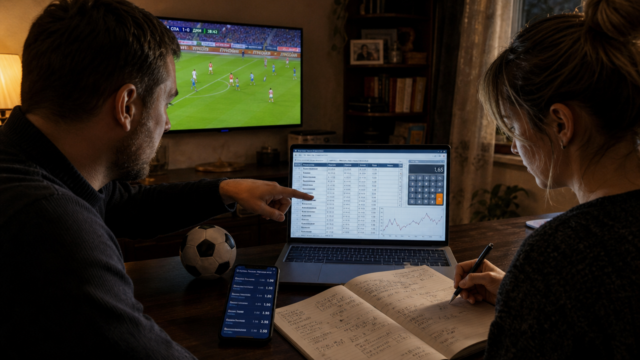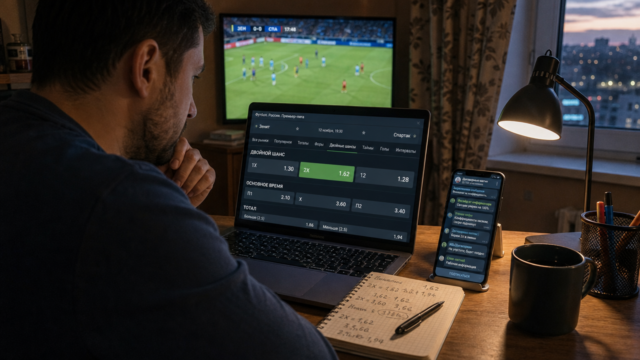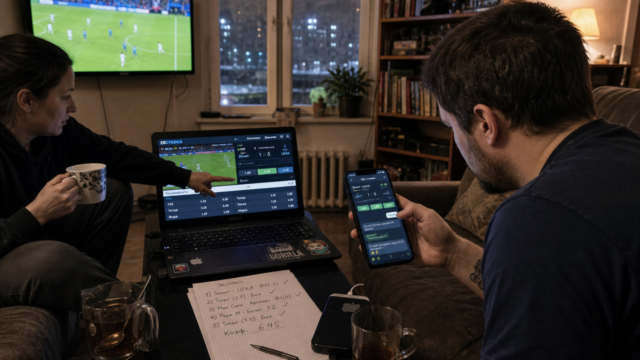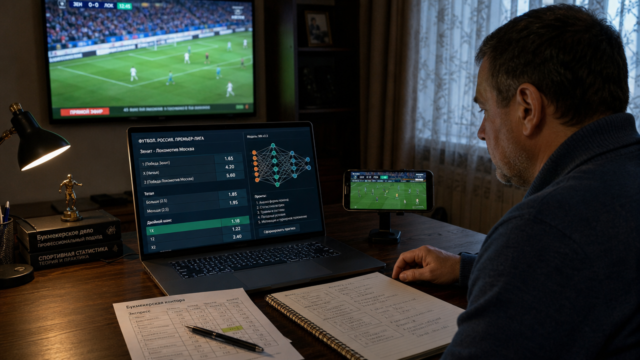
Consider a representative league example: the home side is listed at -150 on the moneyline against the visiting side, with the total at 2.5 goals and the under at -115. A -150 moneyline means you risk $150 to win $100, and the market’s implied probability is 60%. That is not a reliable football pick. If your model has the home side at 65% to win, the price has value. If your model has it at 58%, the banker label is just noise. The same discipline applies to futures. Spain is 5.55 (18.0% implied probability) to win the 2030 final tournament, France is 7.10 (14.1%), and Portugal is 8.10 (12.3%). None of those are bankers.
Line Shopping Before Any Football Final Bet
Shopping the number matters more than picking the winner. Reported operator margins range from 5.5-7% and 4-6%. A 6% margin on a -150 favorite means the true break-even rate is higher than the raw 60% implied by the price. If one book has under 2.5 goals at -105 and another has the same total at -115, the break-even rates are 51.2% and 53.5%. Over 85 football bets, that is a 2.3-point difference in the required hit rate. That gap is closing line value: the price you take now versus the price the market settles on at kickoff. Take the better number or pass.
What a Strategy of 85 Entries for Football Bets Actually Tells You
A strategy of 85 entries for football bets is a sample, not a system. Let one unit equal 1% of your bankroll. If you win 51 of 85 at -110, the profit is about 12.4 units because 51 wins return about 46.4 units and 34 losses cost 34 units. That is a 60% hit rate. But an 85-bet sample can show 60% even if your true edge is 55%. If a guide markets an 85% Hit-Rate Final Betting Guide, the math is 72 wins and 13 losses. At -110, that would profit about 52.5 units, a result far above the 52-55% long-term range most sharp bettors use as a benchmark. Treat that number as a claim to verify, not a reason to bet.
Maximum Bet on Football Means Two Different Numbers
Reported data shows football has the highest bookmaker limits, with one operator reportedly accepting 22.5 million rubles on a top match. High odds often receive lower limits because the book is managing variance. But a sportsbook’s maximum is not your staking plan. A maximum bet on football should be tied to bankroll size and edge, not the button the book lets you press.
- Standard play: 1-2% of bankroll
- Strong edge with a better-than-market price: 2-3%
- Maximum bet on football: cap at 3% unless the price is mispriced and a 10-loss run would not threaten the bankroll
- Avoid loss-doubling systems: starting at $25, five losses cost $775 and the sixth stake is $800
Football Final Bets and Late Line Movement
Football final bets are wagers placed after lineups, injury reports, and market moves. The injury report is the official list of players out or doubtful. If a striker is confirmed out and the total drops from 2.5 to 2.25 at -120, that move already happened. Taking the under at the new price is not closing line value; it is chasing news. A better final bet is the over if the market overcorrects, or the under only if the new price still gives a probability edge. In soccer, the spread is often expressed as a -0.5 goal line, the equivalent of a moneyline: the team must win.
Today’s Condition
In the representative example, the only playable condition is price-based. If the home side’s moneyline moves from -150 to -120 after lineup confirmation and your model still has it at 60% or better, the -120 price offers a small edge because the implied probability drops to 54.5%. The bet is the home side’s moneyline at -120 or better, or the -0.5 goal line at -115 or better. If the best available price is -145, pass. There is no guaranteed football pick for today. A maximum stake on this type of edge should stay at 1-2% of bankroll, and the bet is voided if the line moves back above -130 before kickoff.